
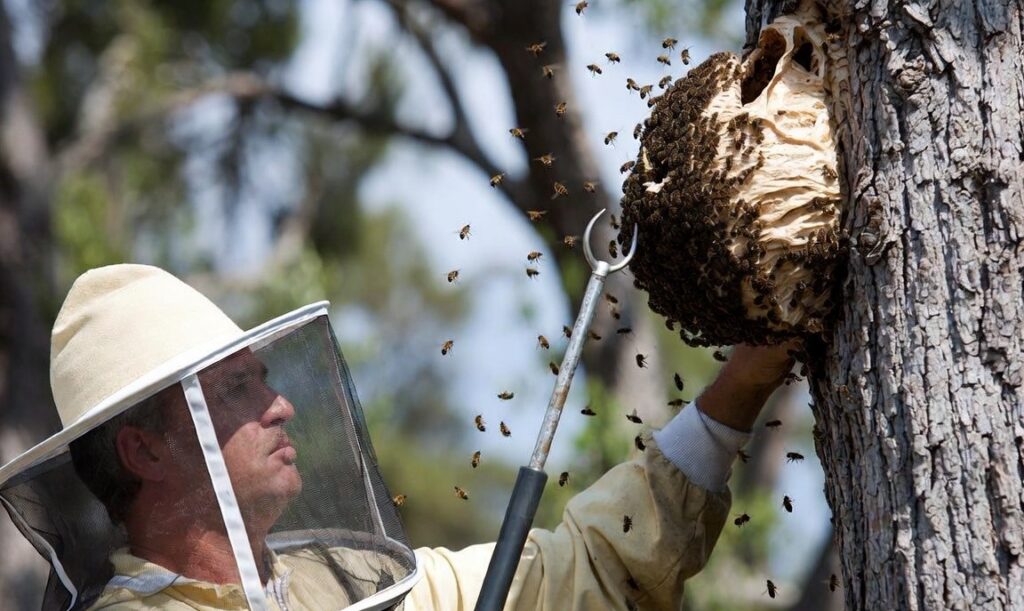
Finding a bee nest on your property in Florida is a situation that demands the right response, not a rushed one. Bees are protective of their colonies, and disturbing a nest without understanding what species you are dealing with, how large the colony is, and where exactly it is located can turn a manageable situation into a genuinely dangerous one within seconds.
Florida’s warm climate supports year-round bee activity and a wide range of species, including some that are far more aggressive than the honeybees most people picture when they think of a hive. Knowing how to approach bee nest removal safely, when a ground bees nest removal requires professional help, and what distinguishes a situation you can handle from one that requires immediate expert intervention is information every Florida homeowner should have before they get close to any active nest.
Identify the Species Before You Do Anything Else
The single most important step before any bee nest removal attempt is identifying what species you are dealing with. Florida is home to several bee species, and each one requires a different approach.
Honeybees
Honeybees are the most commonly encountered colony-forming bees in Florida and one of the most important pollinator species in the country. They build wax comb nests inside enclosed cavities such as hollow trees, wall voids, attic spaces, and occasionally inside the eaves or soffits of homes. Honeybee colonies can grow to tens of thousands of individuals and produce significant amounts of honey, which can cause structural damage and attract other pests if a colony is simply killed in place without removing the comb.
Honeybees are generally non-aggressive when undisturbed but will defend their colony forcefully when threatened. In Florida, there is also a meaningful risk that any feral honeybee colony is Africanized, a hybrid species that is physically indistinguishable from European honeybees but responds to perceived threats with far greater speed and intensity. Africanized honeybees have been established throughout Florida since the 2000s and are a genuine safety concern for homeowners who approach an unknown colony without professional identification.
Ground Bees
Several bee species in Florida nest in the ground rather than in elevated structures. Bumblebees, mining bees, and sweat bees are among the most common ground-nesting species. Ground bees typically nest in dry, bare, or sparsely vegetated soil and create small entrance holes at ground level that can be easy to stumble across accidentally while gardening, mowing, or walking across the yard.
Most ground bee species are solitary or form small colonies and are significantly less aggressive than social species like honeybees or yellow jackets. Many will not sting at all unless directly handled. However, bumblebees, which do form colonies and will defend a nest if disturbed, are an exception and require careful handling.
Wasps and Yellow Jackets
It is worth noting that many Florida homeowners confuse wasp and yellow jacket nests with bee nests. Wasps build papery nests from chewed wood fiber and are commonly found under eaves, inside wall voids, and in ground cavities. Yellow jackets are particularly aggressive and will sting repeatedly when their nest is disturbed. If the nest you have found is paper-like in texture and gray or tan in color, it is almost certainly a wasp or yellow jacket nest rather than a bee nest and requires a different removal approach.
How to Remove a Bee Nest: When You Can Handle It Yourself
For small, newly established bee nests in accessible locations and for ground bee colonies that are clearly non-aggressive, some situations can be managed without professional involvement. The key word is some. The following guidance applies to low-risk scenarios only.
Small Exposed Nests in Early Stages
A very small nest with minimal activity, fewer than a hundred bees, that has been established recently in an accessible outdoor location may be manageable with the right protective clothing and a commercial bee spray applied at night when bee activity is lowest and most bees are inside the nest. Always wear full protective clothing including a face covering, long sleeves, and gloves. Keep an escape route clear before you approach. Do not attempt removal if you have any allergy to bee stings.
How to Remove a Bee Nest From a Structure
Bees nesting inside a wall void, attic, or soffit of your home require a different approach entirely from an exposed outdoor nest. Simply killing the bees without removing the comb creates a secondary problem. Honey and wax left inside a wall will melt in Florida’s heat, attract other pests including roaches and rodents, and cause structural damage to surrounding materials. Any bee nest removal from inside a structure should include full comb and honey removal, which almost always requires cutting into the wall and is not a DIY task for most homeowners.
How to Remove a Bees Nest in the Ground
Ground bees nest removal is generally less dangerous than removing an elevated colony but still requires a careful approach.
Identify Activity Level First
Before approaching any ground nest, observe it from a safe distance for several minutes. Count the number of bees entering and exiting the entrance hole. A high level of activity indicates a larger or more established colony. A small number of bees coming and going suggests a smaller, likely solitary or semi-social species that poses minimal risk.
Underground Bees Nest Removal Options
For small, clearly non-aggressive ground bee colonies, one of the most effective and least disruptive approaches is simply waiting. Many ground-nesting bees in Florida are seasonal and will abandon the nest naturally within a few weeks at the end of their breeding cycle. Once the colony has vacated, fill the entrance hole with soil and address the conditions that made the location attractive, typically dry, bare, compacted soil, by adding mulch or ground cover plants that discourage future nesting.
For larger ground colonies or bumblebee nests that pose a risk due to their location near a frequently used area of the yard, professional underground bees nest removal is the safest approach. A licensed pest control technician can identify the species, assess the colony size, apply the appropriate treatment safely, and advise on preventing future nesting in the same area.
What Not to Do With a Ground Bees Nest
Pouring gasoline, boiling water, or other home remedies into a ground bee nest is dangerous and ineffective. These methods can injure or kill you before they have any meaningful effect on the colony, and they leave behind dead bees and residue that can attract other insects. Do not attempt to flood a ground nest or block the entrance hole while the colony is active. Blocking the entrance drives bees to find an alternative exit, which may bring them inside a wall or closer to your living space.
When to Call a Professional for Bee Nest Removal in Florida
Professional bee nest removal is not optional in the following situations, and attempting to handle them without expert help carries serious risk.
Any nest located inside a wall, ceiling, attic, soffit, or other enclosed structural area requires professional removal that includes comb extraction. Any colony that shows signs of Africanized behavior, bees that pursue rather than retreat after minimal disturbance, multiple simultaneous stings, or defensive response at a distance from the nest require immediate professional intervention and evacuation of the surrounding area. Any large established colony regardless of location, any nest near children’s play areas, doorways, or high-traffic zones, and any situation where the homeowner or family members have known bee sting allergies all warrant professional service without exception.
In Florida, bee removal professionals can also offer live removal and relocation services for honeybee colonies rather than extermination, which is worth requesting given the importance of honeybees to Florida’s agricultural ecosystem. Not every pest control company offers live relocation, so confirm this option when calling if it is a priority for you.
Protect Your Florida Property From Bee Nests the Right Way
Bee nest removal in Florida is not a one-size-fits-all situation. The species, the location, the size of the colony, and the construction of your home all determine the safest and most effective approach. Getting that assessment wrong can mean the difference between a resolved problem and a medical emergency.
iPest Control Inc. provides safe, professional bee nest removal for Florida homeowners who need expert help identifying, treating, and eliminating bee colonies from their property. Our licensed technicians assess every situation before recommending a course of action and handle removal in a way that protects your family, your home, and the surrounding environment.
Contact iPest Control Inc. today to schedule your inspection and get rid of that bee nest safely and permanently.
Frequently Asked Questions
- How do I know if the bees on my property are Africanized?
Africanized honeybees are physically identical to European honeybees and cannot be reliably distinguished by appearance alone. Behavioral cues are the most useful indicator. Africanized colonies respond to disturbance more quickly, pursue threats over greater distances, and send a much larger number of bees to defend the colony than European honeybees typically would. If you are unsure, treat any unknown feral honeybee colony in Florida as potentially Africanized and contact a professional before approaching it. - Is it legal to remove bee nests yourself in Florida?
Florida does not prohibit homeowners from removing bee nests on their own property, but certain situations involving protected species or commercial removal may be subject to specific regulations. Honeybees are considered beneficial insects and some counties encourage live relocation over extermination. Contact your local extension office or a licensed pest control professional for guidance specific to your county. - How long does it take for bees to abandon a ground nest naturally?
Most solitary ground-nesting bee species in Florida complete their nesting cycle within four to six weeks and will abandon the nest without intervention. Bumblebee colonies, which are social and more persistent, may remain active for several months before naturally declining at the end of the season. If the nest is in a low-traffic area and the species is non-aggressive, waiting out the season is often the least disruptive option. - What happens if I leave a honeybee nest inside my wall untreated?
An untreated honeybee colony inside a wall void will continue to grow and produce honey throughout the year in Florida’s climate. The honey and wax will melt during summer heat, seep through walls, and attract roaches, ants, rodents, and other pests. The weight of accumulated comb can also cause structural damage to wall cavities over time. Leaving an established colony in place is almost always more expensive to address later than treating it promptly. - Can ground bees sting through shoes or clothing?
Most ground-nesting bee species in Florida have stingers capable of penetrating thin clothing and some types of footwear. Thick leather boots and heavy denim provide reasonable protection against incidental contact, but deliberate disturbance of an active ground nest without full protective clothing is not advisable regardless of the species involved. If you are near a ground nest and bees become active, move away slowly and calmly rather than swatting or running.