
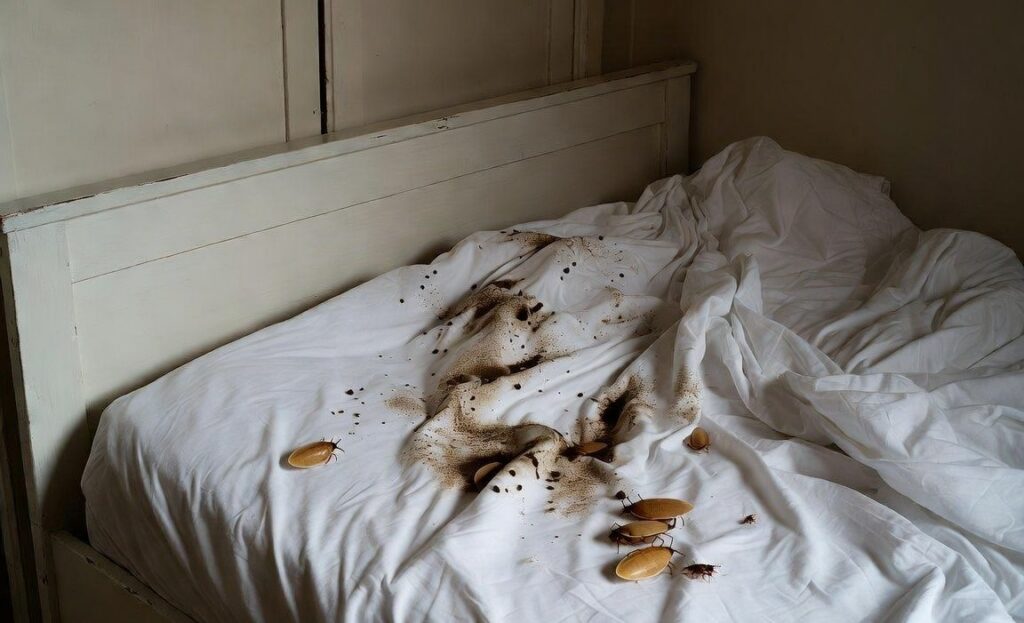
Waking up with unexplained marks on your skin is unsettling. Finding small dark stains on your sheets makes it worse. But before you assume the worst, it helps to know exactly what you are looking for and what it means, because bed bug evidence is specific, consistent, and identifiable once you know what distinguishes it from everything else that might look similar at first glance.
Bed bugs leave a trail. Bed bug poop, shed shells, egg casings, and blood marks on sheets are all physical evidence that builds up over time and tells a clear story about whether an infestation is present, how long it has been active, and how serious it has become. This guide walks through every major sign, what each one looks like, where to find it, and what separates genuine bed bug evidence from the look alikes that send homeowners into unnecessary panic.
What Bed Bug Poop Looks Like and Where to Find It
Bed bug poop is one of the most reliable indicators of an active infestation and one of the first signs that appears before the bugs themselves are spotted. It is digested blood, which gives it a very specific appearance that is difficult to confuse with anything else once you know what to look for.
Bed bug fecal matter appears as small dark spots, typically black or very dark brown, roughly the size of a pen tip or a period at the end of a sentence. On fabric surfaces like mattress seams, sheets, and upholstered headboards, the spots bleed slightly into the material and look similar to a felt tip marker dot that has spread at the edges. On hard surfaces like wood or plastic, the spots appear more defined and sit on the surface rather than bleeding in.
The most important characteristic of bed bug poop is clustering. Bed bugs defecate repeatedly near where they hide and feed, so the spots appear in groups rather than scattered individually. Finding a cluster of dark spots in a mattress seam, along the edge of a box spring, or behind a headboard is a strong indicator of active bed bug presence nearby.
Where to check for bed bug fecal stains: mattress seams and tufts, box spring edges and fabric folds, the underside of the bed frame, behind and around the headboard, along baseboards near the bed, inside nightstand drawers, and along the piping of upholstered furniture near sleeping areas.
Bed Bug Shells and Exoskeletons: What They Mean
Finding bed bug shells is one of the clearest signs of an established infestation. Bed bugs molt, meaning they shed their outer skin as they grow through five nymph stages before reaching adulthood. Each time a bed bug molts, it leaves behind a translucent shell called an exoskeleton that holds the exact shape of the bug at that growth stage.
Bed bug shells and exoskeletons are hollow, translucent to light tan in color, and range from tiny pinhead size for early instar nymphs to approximately four to five millimeters for shells shed just before adulthood. They are fragile and crumble easily when touched but hold their shape well when undisturbed in protected areas.
Finding multiple bed bug exoskeletons in the same location tells you two important things. First, the infestation has been present long enough for bugs to have gone through multiple molts. Second, the location where you found them is either a primary harborage area or very close to one. Shells accumulate over time and do not disappear on their own, which makes them useful evidence even when live bugs are not immediately visible.
Where to find bed bug shells: along mattress seams, inside box spring folds, in cracks in wooden bed frames, behind electrical outlet covers near the bed, inside luggage stored near sleeping areas, and in the joints of upholstered furniture.
Bed Bug Marks on Sheets: Blood Stains and Dark Spots
Bed bug marks on sheets come in two forms, and understanding the difference between them helps confirm whether what you are seeing is bed bug evidence or something else.
The first type is small rust-colored or reddish-brown blood stains. These occur when a bed bug is accidentally crushed during sleep after feeding, releasing the blood meal it has just consumed. They may also appear when a bite site continues to bleed slightly after a bug has finished feeding. These stains are small, irregular in shape, and typically appear in clusters or lines corresponding to where you were lying.
The second type is dark fecal staining described in the previous section. Sheets that have been on an infested bed for any period of time typically show both types of marks together, which together form a strong pattern of evidence.
Fresh blood stains on sheets without any other evidence may have other explanations. It is the combination of blood staining alongside fecal spots, shed shells, and other physical evidence that confirms bed bug activity rather than any single sign in isolation.
Bed Bug Eggs on Sheets and Surfaces
Bed bug eggs are small, white, and approximately one millimeter in length, roughly the size of a sesame seed. They are pearlescent white when newly laid and develop a visible eye spot as the embryo develops inside. Eggs are coated with a sticky substance that causes them to adhere to surfaces, which is why they are rarely found loose and are more often found attached to fabric fibers, wood grain, or other textured surfaces near harborage areas.
Finding bed bug eggs on sheets is less common than finding fecal staining or shells because females typically lay eggs in protected harborage areas rather than directly on sleeping surfaces. Eggs are more commonly found in mattress seams, along the folds of box springs, in cracks in the bed frame, and in other sheltered areas close to but not directly on the surface where people sleep.
If you find what appear to be bed bug eggs on sheets, examine the area closely for fecal staining and shells. Eggs are rarely found in isolation from other evidence in an established infestation.
Bed Bugs in the Bathtub: What It Actually Means
Finding what appear to be bed bugs in the bathtub is a situation that confuses many homeowners and the explanation is simpler than most people expect.
Bed bugs do not naturally inhabit bathrooms. They are drawn to carbon dioxide, body heat, and the proximity of sleeping humans, which means their primary harborage areas are always near beds and sleeping furniture. Bed bugs found in a bathtub almost always ended up there after falling or being transported from infested bedding, clothing, or luggage placed near the tub. In some cases, homeowners place infested items in the bathtub intentionally to contain bugs they have found while inspecting, and the smooth porcelain surface prevents them from climbing out.
If you find bed bugs in the bathtub, treat it as confirmation of an infestation in the adjacent sleeping area rather than evidence of a bathroom-based problem. The source is almost certainly the bedroom, not the bathroom itself.
Bed Bug Look Alikes: What Gets Confused for Bed Bugs
Misidentification is extremely common, and knowing what bed bug look alikes exist prevents unnecessary alarm and misdirected treatment.
Bat bugs are the most common bed bug look alike and are virtually identical in appearance to the naked eye. The primary difference is in the length of the hairs on the thorax, which requires magnification to distinguish. Bat bugs are found in homes with bat infestations and require a completely different treatment approach.
Spider beetle are small, reddish-brown insects with a rounded abdomen that can superficially resemble bed bug nymphs. They are scavengers that feed on stored food products rather than blood and do not bite.
Book lice are very small, pale insects found in humid environments near paper, cardboard, or stored food. They are much smaller than bed bugs and lack the distinctive flat oval body shape.
Carpet beetle larvae are sometimes mistaken for bed bug nymphs due to their small size and reddish-brown coloring, but they are elongated and covered in visible bristles rather than the smooth, flat oval shape of a bed bug.
Swallow bugs are parasites of cliff swallows and are structurally similar to bed bugs. They enter homes when bird nests are present near roof lines or eaves and can bite humans when their bird hosts are absent.
Correct identification before treatment matters enormously. Treating for bed bugs when a different pest is actually present wastes money, delays resolution, and may not address the actual source of the problem.
What to Do If You Find Evidence of Bed Bugs
Do not wait for a live sighting before acting. Bed bug poop, shells, eggs, and blood staining on sheets are all evidence that bugs are present, active, and likely multiplying. Bed bug populations double in size approximately every two weeks under favorable conditions, which means the window between early evidence and a serious infestation closes quickly.
Avoid spraying consumer-grade pesticides on infested areas before a professional inspection. Many store-bought products cause bed bugs to scatter and disperse to new areas of the home, making the infestation harder to treat and significantly expanding its footprint.
The most effective next step is a professional inspection by a licensed pest control technician who can confirm the species, locate all harborage areas, assess the scope of the infestation, and recommend the right treatment method for your specific situation.
Stop Bed Bugs Before They Take Over Your Miami Home
Bed bug evidence does not go away on its own and the infestation behind it does not either. The sooner you act on what you find, the smaller the problem remains and the lower the cost of getting rid of it completely.
iPest Control Inc. provides professional bed bug inspections and treatment for Miami homeowners and renters. Our licensed technicians identify all signs of infestation, locate harborage areas throughout the home, and deliver targeted treatments that eliminate bed bugs at every life stage including eggs, nymphs, and adults.
Contact iPest Control Inc. today to schedule your bed bug inspection and find out exactly what is in your home and how to get rid of it fast.
Frequently Asked Questions
- How long does it take for bed bug poop stains to appear after an infestation begins?
Fecal staining begins appearing almost immediately after bed bugs start feeding and defecating in a location. In a mattress seam or along a bed frame, visible staining can accumulate within one to two weeks of an infestation becoming established. The older and more active the infestation, the more extensive and visible the staining becomes. - Can bed bug shells alone confirm an infestation without finding live bugs?
Shed exoskeletons are strong physical evidence of a past or present infestation but should be evaluated alongside other signs before a definitive conclusion is drawn. Old shells from a previously treated infestation that was not fully cleaned up can persist for months. A professional inspection can determine whether shells are accompanied by active fecal staining, eggs, or live bugs that indicate a current problem. - What do bed bug bites look like compared to other insect bites?
Bed bug bites typically appear as small, red, itchy welts often arranged in a line or cluster pattern on exposed skin. They are difficult to distinguish from mosquito or flea bites based on appearance alone. The pattern, location, and timing of bites alongside physical evidence found in the sleeping area provide a more reliable basis for determining whether bed bugs are responsible than bite appearance alone. - If I find one bed bug, does that mean I have a full infestation?
A single bed bug does not automatically indicate a large infestation but should never be dismissed. Bed bugs hitchhike on luggage, clothing, and secondhand furniture, and a lone bug may be a scout from a newly introduced population. A professional inspection immediately after finding even one bug is the most reliable way to determine whether it is an isolated introduction or evidence of an established colony. - Can I get rid of bed bugs myself without professional treatment?
Consumer-grade bed bug products including sprays and powders can reduce surface populations but rarely eliminate an infestation completely. Bed bugs hide in areas inaccessible to surface sprays, and their eggs are highly resistant to most over-the-counter products. Professional treatment methods including heat treatment and targeted professional-grade insecticides are significantly more effective at full colony elimination including eggs, nymphs, and adults in all harborage areas.