Tent fumigation is the treatment most Miami homeowners picture when they hear the word termites. It is also the one they dread most. Vacating your home for two to three days, making arrangements for pets, covering or removing food, and coordinating with neighbors is a significant disruption. And for many homeowners, the cost alone is enough to make them wonder whether there is another way.
The good news is that termite control without tenting is a legitimate and highly effective option for many Miami homes. The right no tent termite control method depends on the termite species present, how widely the infestation has spread, and the specific construction of the property. In some cases, non-fumigation treatments are not just adequate but are actually better suited to the situation than tenting would be.
This guide covers every major no tent termite treatment option available in Miami, which situations each one fits best, and what Miami homeowners need to know about environmentally friendly and natural approaches before making a decision.
Why Tenting Is Not Always Necessary
Tent fumigation is the most comprehensive treatment available for drywood termite infestations that have spread throughout an entire structure. When a colony has penetrated multiple areas of a home including walls, attic framing, and interior wood, fumigation delivers gas into every cavity simultaneously and eliminates termites regardless of where they are hiding.
But fumigation is a whole-structure solution designed for whole-structure problems. Not every termite infestation in Miami reaches that level. Infestations caught early, colonies confined to a specific area of the home, and certain termite species respond extremely well to targeted treatments that do not require tenting the entire property.
Choosing the right treatment starts with an accurate inspection. A licensed professional identifies the species, maps where activity is occurring, and determines whether the infestation is localized or widespread. That assessment is what makes the difference between a targeted no tent solution that works and a fumigation that was unnecessarily disruptive and expensive.
No Tent Termite Control Methods That Work in Miami
Localized Spot Treatment
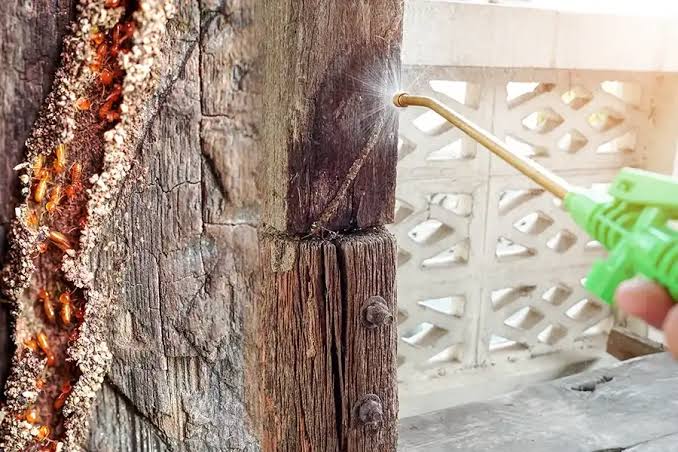
Spot treatment is the most direct form of termite control without tenting and works best when drywood termite activity is confined to a specific, accessible area. A licensed technician drills small holes into the infested wood and injects termiticide directly into the galleries where termites are active. The product spreads through the colony and eliminates it at the source.
Spot treatment is fast, minimally invasive, and requires no evacuation of the home. It is highly effective for early-stage drywood termite infestations in a single location such as a window frame, a section of attic framing, or a piece of interior trim. It is not appropriate for infestations that have already spread to multiple areas of the structure, where a more comprehensive approach is required.
Liquid Termiticide Soil Treatment
Liquid soil treatment is the standard solution for subterranean termites and one of the most widely used termite control methods in Miami. A licensed technician applies termiticide around and beneath the foundation of the home, creating a chemical barrier in the soil that kills termites on contact and prevents new colonies from entering through the ground.
Subterranean termites, including the highly destructive Formosan species common throughout South Florida, travel through the soil and require this type of perimeter barrier to be stopped effectively. Liquid soil treatment requires no tenting, no evacuation, and no disruption to the interior of the home. It is applied entirely at the foundation level and typically comes with a renewable annual warranty.
This is one of the most cost-effective and long-lasting no tent termite control options available for Miami homeowners dealing with ground-dwelling species.
Termite Bait Systems
Termite bait systems offer a low-disruption alternative to both liquid treatments and fumigation, and they work particularly well as a long-term monitoring and elimination strategy for subterranean termites.
Bait stations are installed in the soil around the perimeter of the property at regular intervals. Termites find the bait while foraging, consume it, and carry it back to the colony where it spreads to other individuals including the queen. The active ingredient works slowly enough that it is distributed widely throughout the colony before termites begin dying, which is what makes bait systems so effective at full colony elimination rather than just surface suppression.
Bait systems require no chemicals to be applied inside or under the home, no evacuation, and no disruption to daily life. They do require ongoing monitoring visits to check station activity and replace bait as needed, which means annual service fees apply beyond the initial installation cost. For homeowners who want ongoing termite protection with minimal chemical exposure and maximum convenience, bait systems are one of the strongest options available.
Heat Treatment
Heat treatment is a no tent termite control method specifically designed for drywood termites and is one of the most effective alternatives to fumigation for localized or room-specific infestations. Specialized heating equipment raises the temperature inside the treated area or the entire structure to levels lethal to termites, typically between 120 and 140 degrees Fahrenheit, and holds that temperature long enough to penetrate deep into wood where colonies are active.
Heat treatment is chemical-free, leaves no residue, and can be completed in a single day without the multi-day evacuation fumigation requires. It penetrates into wall voids, furniture, and structural wood in ways that surface sprays cannot, making it highly thorough for drywood termite infestations that are too widespread for spot treatment but not severe enough to justify whole-structure fumigation.
It is one of the most popular no tent options among Miami homeowners who want comprehensive drywood termite elimination without the disruption or chemical exposure of fumigation.
Environmentally Friendly Termite Control Options
For Miami homeowners who want to reduce chemical exposure in and around their homes, several environmentally friendly termite control approaches deliver real results.
Borates
Borate-based wood treatments are among the most well-established environmentally friendly termite control options available. Borates are naturally occurring mineral compounds that are applied directly to wood surfaces, where they penetrate the wood and become toxic to termites and other wood-destroying insects that consume it. They are low in toxicity to people and pets and can be applied during construction or renovation to protect new or exposed wood throughout the life of the structure.
Borates are particularly effective as a preventive measure and as a complement to other treatments rather than a standalone solution for active infestations. They do not provide the same penetration depth as injected termiticides for established colonies but are an excellent addition to any long-term termite protection plan.
Orange Oil
Orange oil, derived from orange peel extract, contains a compound called d-limonene that is toxic to drywood termites on contact. It is injected directly into termite galleries in a similar manner to conventional spot treatments and is considered one of the more environmentally friendly termite control options due to its natural origin and low mammalian toxicity.
Orange oil is effective for localized drywood termite infestations where direct injection into active galleries is possible. Its limitation is reach. It does not travel beyond where it is directly applied, which makes it less effective for larger or more diffuse infestations. For small, accessible colonies, it is a genuinely viable alternative to synthetic termiticides.
How to Control Termites Naturally: What Works and What Does Not
Many Miami homeowners search for how to control termites naturally and encounter a wide range of suggestions including neem oil, diatomaceous earth, cardboard traps, and beneficial nematodes. It is worth being direct about what these approaches can and cannot do.
Natural methods like diatomaceous earth and neem oil have some scientific basis for minor pest deterrence but are not proven effective against established termite colonies in a residential setting. They can disrupt surface-level insect activity but do not penetrate wood galleries, reach queens, or eliminate colonies in the way that professional treatments do.
The most effective way to control termites naturally in a meaningful sense is through prevention and environmental management. Eliminating wood-to-soil contact near the foundation, fixing moisture problems promptly, removing wood debris from around the property, and ensuring proper ventilation in attic and crawl spaces all reduce the conditions that attract and support termite colonies. These steps do not eliminate an existing infestation but they meaningfully reduce reinfestation risk after treatment is complete.
For any active termite infestation in Miami, professional treatment is the only reliable path to full elimination. Natural deterrents are best used as a complement to professional service rather than a replacement for it.
Find the Right No Tent Solution for Your Miami Home
Termite control without tenting is not a compromise. For many Miami homeowners, it is the most appropriate, effective, and practical solution available. The key is matching the right method to the right situation, and that starts with a thorough professional inspection from a licensed termite specialist who knows Miami’s pest environment inside and out.
iPest Control Inc. offers a full range of no tent termite control options for Miami homeowners including spot treatments, liquid soil barriers, bait systems, and heat treatment. Our licensed inspectors assess your property thoroughly, identify the species and scope of any infestation, and recommend the most targeted and cost-effective solution for your specific situation.
You do not have to tent your home to get rid of termites. Contact iPest Control Inc. today to find out which treatment is right for your Miami home and get a clear, honest quote with no pressure.
Frequently Asked Questions
- Is termite control without tenting as effective as fumigation? For the right infestation and the right species, yes. Localized drywood termite infestations, subterranean termite activity, and early-stage infestations respond extremely well to targeted no tent treatments. Fumigation is most appropriate for severe drywood termite infestations that have spread throughout the entire structure. A licensed inspection determines which approach fits your specific situation.
- How long do no tent termite treatments last in Miami? Liquid soil treatments typically last five to ten years with proper application. Bait systems require annual monitoring to remain effective. Heat treatment eliminates active drywood termites on the day of service but does not prevent future infestation, so ongoing monitoring is recommended. Spot treatments address the treated area but do not protect the rest of the structure from new activity.
- Can I stay in my home during no tent termite treatment? For most no tent treatments including liquid soil applications, bait system installation, and spot treatments, residents can remain in the home during and after service with minimal disruption. Heat treatment may require evacuation of the treated area or the entire home for several hours depending on the scope of treatment. Your technician will give you specific guidance before service begins.
- Will no tent termite treatment work for Formosan termites in Miami? Yes. Liquid soil treatments and bait systems are both highly effective against Formosan subterranean termites, which are one of the most destructive species in South Florida. Formosan termites are ground-dwelling, which makes soil barrier treatments and bait systems the most appropriate and effective control methods for this species.
- How do I know if my termite infestation requires tenting or can be treated without it? This determination requires a professional inspection. The key factors are the termite species involved, whether the infestation is localized or widespread, and how accessible the affected areas are to targeted treatment. A licensed WDO inspector can assess your property and give you an honest recommendation about whether a no tent option is appropriate or whether fumigation is the more effective choice for your specific situation.