
Nothing makes a clean kitchen feel dirty faster than finding a line of ants crawling across the counter you just wiped down.
You clean them up, remove anything they could be eating, and think the problem is handled. Then they show up again near the sink. Or inside a cabinet. Or suddenly in the bathroom where there is not even food around.
Once ants keep returning, killing the ones you can see is clearly not enough. There is a reason they are coming inside, and there may be a much larger colony behind the few workers moving through your home.
Knowing how to get rid of ants starts with understanding which ants you are dealing with and what is keeping them around. This guide covers some of the common ants Miami homeowners encounter and the steps that can help stop an infestation from becoming a recurring problem.
Common Types of Ants in Miami Homes
Not every ant entering your home behaves the same way. Identifying the type of ant matters because nesting habits, food preferences, and effective treatment methods can vary from one species to another.
Sugar Ants
“Sugar ants” is a name homeowners often use for small ants that seem to appear whenever something sweet is left behind.
They may gather around:
- Sugar and syrup
- Fruit and juice
- Soda spills
- Crumbs
- Pantry foods
- Pet food
- Sticky residue around containers
The important thing to know is that “sugar ant” does not necessarily identify one specific species.
If tiny ants keep returning even after food has been cleaned up, figuring out exactly which species is present can help determine where they may be nesting and how they should be treated.
Ghost Ants
Ghost ants are especially relevant in South Florida.
They are extremely small, with a dark head and thorax and pale legs and abdomen that can make them difficult to see against light surfaces. UF/IFAS identifies ghost ants as an important household pest in Florida and notes that they commonly seek sweet foods.
Inside homes, they are often found around:
- Kitchens
- Bathrooms
- Sinks
- Cabinets
- Baseboards
- Potted plants
- Areas with moisture
Ghost ants can nest both indoors and outdoors and may establish several connected nesting sites.
This is one reason wiping away one trail does not necessarily mean the infestation has disappeared.
Fire Ants
Fire ants are a different problem entirely.
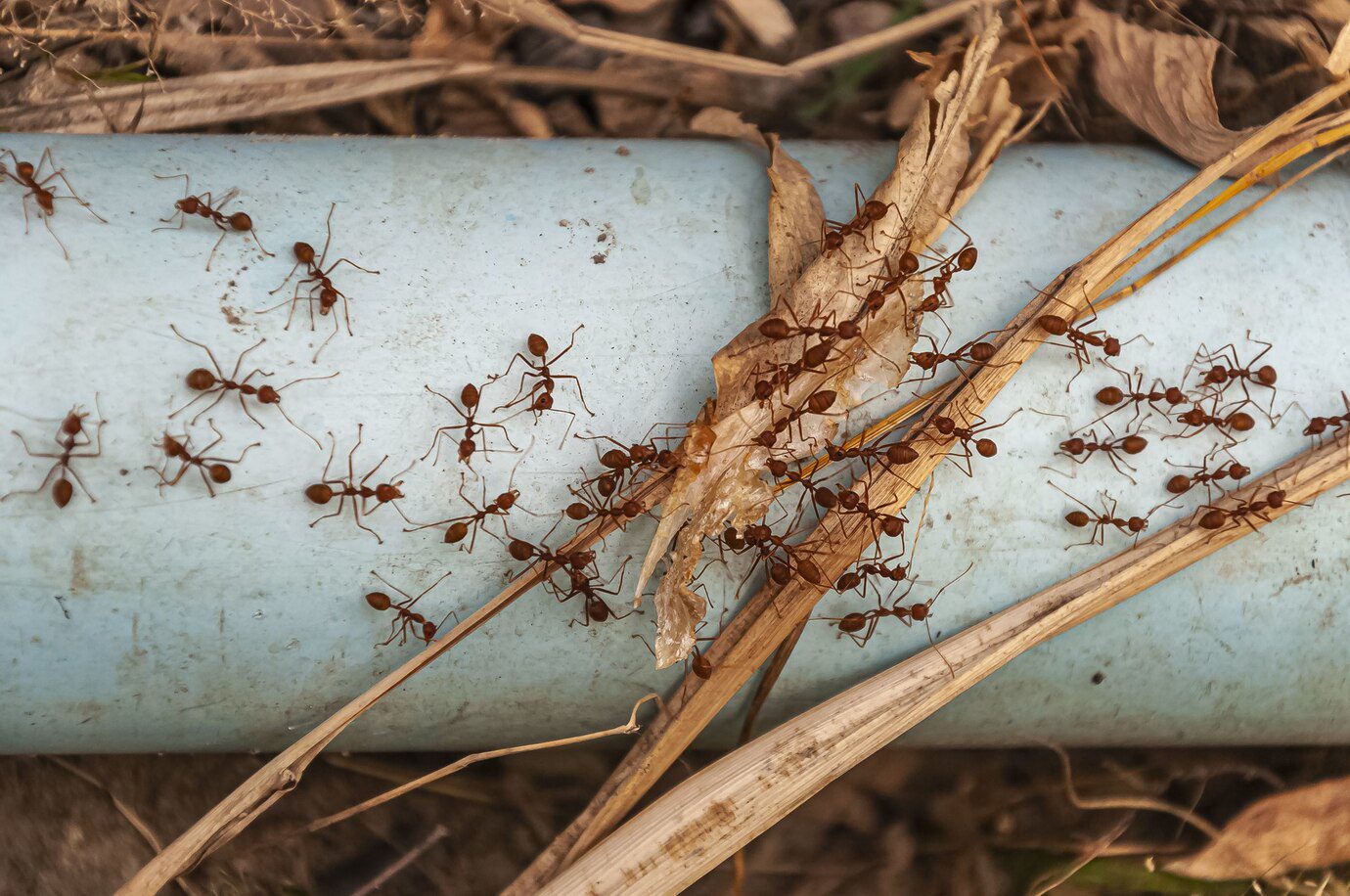
Rather than creating the familiar trail across a kitchen counter, red imported fire ants are typically associated with lawns, landscaped areas, trees, pavement, and other outdoor spaces.
Their nests may appear as mounds, although Florida’s sandy soil can make some mounds less obvious. Fire ants are also aggressive when their nests are disturbed and can deliver painful stings.
A fire ant infestation in the yard therefore requires a different control strategy from tiny ghost ants appearing inside the kitchen.
How to Get Rid of Ants in Your Home and Yard
Once you have an idea of which ants are present, the next step is finding out what is supporting them. Effective ant control usually involves more than killing the workers you happen to see.
Follow the Ant Trail Before Cleaning It Away
Your first instinct may be to wipe away every ant immediately.
Before you do, watch the trail for a few minutes.
Look at where the ants are coming from and where they disappear. You may find them traveling:
- Under a baseboard
- Through a window frame
- Around plumbing
- Behind the kitchen sink
- Through a cabinet gap
- Around a door
- From an exterior wall
The trail can help you identify both what is attracting them and the route they are using to enter the house.
Finding that route gives you far more useful information than simply killing the ants halfway across the counter.
Remove the Food Sources Keeping Them Around
Ants do not need a large amount of food to keep returning.
A little juice underneath an appliance, sugar residue inside a cabinet, crumbs near the toaster, or pet food left out can be enough to support continued activity.
Pay attention to the less obvious places.
Clean underneath appliances, wipe sticky containers, store pantry items securely, rinse recyclables, keep trash covered, and clean around pet feeding areas.
For ghost ants specifically, UF/IFAS recommends sanitation and storing food in tightly sealed containers as part of an effective management strategy.
Cleaning may not eliminate an established colony by itself, but it removes one of the main reasons ants continue exploring your home.
Fix Moisture Problems Around the House
Food is not the only thing ants are looking for.
Water can also draw ants indoors, which is especially important in Miami’s humid environment.
Check:
- Under sinks
- Around faucets
- Behind refrigerators
- Around dishwashers
- Bathrooms
- Air-conditioning equipment
- Damp cabinets
- Potted plants
Even minor leaks or persistent condensation can create a reliable water source.
UF/IFAS specifically recommends reducing moisture from leaks and condensation when managing ghost ants.
If ants repeatedly appear near a bathroom or sink even when the area is clean, moisture may be helping keep them there.
Use Ant Baits Correctly
Ant bait works differently from a spray that kills insects on contact.
The idea is for foraging ants to feed on the bait and carry it back toward the colony, allowing the treatment to reach ants that never leave the nest.
Placement matters.
Set bait where ants are already actively traveling and check whether they are feeding on it. UF/IFAS recommends checking bait within a day or two and relocating it if the ants are not feeding.
Avoid spraying insecticide directly around bait stations unless the product instructions specifically tell you otherwise. Repellent treatments can interfere with the ants reaching and feeding on the bait.
Always follow the pesticide label carefully, particularly in homes with children or pets.
Seal the Entry Points Ants Are Using
Once you identify where ants are entering, make those pathways harder to use.
Inspect areas around:
- Windows
- Doors
- Plumbing lines
- Utility penetrations
- Exterior walls
- Foundations
- Screens
- Wall cracks
Seal appropriate gaps and repair damaged screens, weatherstripping, or door seals.
Also inspect the outside of the home.
Branches, shrubs, vines, and other vegetation touching the structure can give ants another route inside.
Exclusion will not eliminate an established indoor colony by itself, but reducing entry points can help prevent ants outside from continually replacing the ones you remove.
Treat Fire Ants Differently From Indoor Ants
Fire ants should not be handled the same way as ghost ants traveling through a kitchen.
Spraying the ants you see moving around a mound is unlikely to eliminate the colony. UF/IFAS notes that only a portion of a fire ant colony is actively foraging at one time, which is one reason spraying visible workers is ineffective.
Fire ant management may involve:
- Individual mound treatments
- Fire ant baits
- Broadcast bait applications
- A combination of bait and mound treatment
Treatment needs to reach the colony rather than only the workers above ground.
UF/IFAS also warns that popular home remedies such as grits, club soda, wood ashes, and simply spraying foraging workers are not effective ways to eliminate fire ant colonies.
Avoid disturbing active mounds unnecessarily, particularly in parts of the yard used by children and pets.
Why Do Ants Keep Coming Back?
Repeated ant activity usually means something is still supporting the infestation. The colony may remain intact, another nesting site may be nearby, or conditions around the property may continue giving ants easy access to food, water, and shelter.
The Ants You See Are Only the Workers
The ants moving across your counter are foragers.
Removing those workers may temporarily make the trail disappear, but the colony can continue producing more.
This is why an infestation may seem completely gone after spraying only to return days later.
The goal is not simply to eliminate the visible trail. Effective control needs to address where the ants are coming from.
The Wrong Treatment May Miss the Real Problem
Species matters.
Ghost ants, fire ants, carpenter ants, and other ants do not all nest in the same places or respond to identical treatments.
Ghost ants, for example, can maintain multiple nesting sites and are commonly managed using sanitation, moisture reduction, exclusion, and appropriately placed bait.
Fire ants require an entirely different outdoor strategy.
If the same treatment keeps failing, misidentifying the ant may be part of the problem.
Conditions Outside Can Keep Sending Ants Indoors
Sometimes the infestation is not completely inside the house.
Ants may be nesting in:
- Soil
- Mulch
- Landscaping
- Trees
- Potted plants
- Beneath pavement
- Around foundations
- Exterior structures
Moisture, vegetation touching the house, accessible food, and small openings can make it easier for outdoor colonies to keep sending workers inside.
This is why a complete inspection should look at the property around the home rather than stopping at the kitchen counter.
When Should You Call a Professional for Ant Control?
Some ant problems can improve once food, moisture, and entry points are addressed. Repeated infestations are different, particularly when you cannot find where the ants are nesting or several areas of the property are affected.
Professional ant control may make sense when:
- Ants return after repeated cleaning and baiting.
- Trails are appearing in several rooms.
- Ants appear to be coming from wall voids or inaccessible spaces.
- You cannot identify the species.
- Several fire ant mounds are appearing in the yard.
- Fire ants are active near areas used by children or pets.
- You cannot determine where the ants are entering.
- The infestation keeps moving from one location to another.
A professional inspection can help identify the ant species, nesting areas, entry points, and conditions allowing the infestation to continue.
Stop Treating the Trail and Start Finding the Colony
Learning how to get rid of ants is much easier when the focus moves beyond the few workers you can see. Food and moisture need to be controlled, entry points need attention, and the treatment needs to match the species involved.
When ants continue appearing despite those efforts, there may be a colony or entry route that is difficult to locate without a more thorough inspection.
iPest Control Inc. provides ant control for homes throughout Miami-Dade and Broward County and begins by identifying the ant and understanding where the activity is coming from.
Depending on the infestation, iPest Control Inc. may use targeted baits, non-repellent treatments, colony-focused treatment, entry-point management, moisture recommendations, and follow-up service to address the problem instead of simply spraying the ants moving across the surface.
Getting rid of the trail gives you a clean counter for the moment. Finding out why the ants keep returning gives you a better chance of keeping it that way.
Frequently Asked Questions About Ant Control
Homeowners often have the same questions once ants begin appearing repeatedly. These answers cover some of the most common concerns about getting ants out of a Miami home or yard.
What is the fastest way to get rid of ants in the house?
The right approach depends on the species and where the colony is located. Start by removing food and moisture, following trails to possible entry points, and identifying the ant. Baits can help with certain household species because foraging ants carry the treatment back toward the colony.
Why do ants keep coming back after I spray them?
Spraying may kill the workers you see without eliminating the colony producing them. If the nest remains active, new workers can eventually replace the ones that were killed. Some repellent sprays can also interfere with baiting strategies.
Are sugar ants and ghost ants the same thing?
Not necessarily. “Sugar ant” is commonly used to describe small ants attracted to sweet foods, while the ghost ant is a specific ant species commonly found in Florida. Correct identification can help determine the most appropriate treatment.
How do I get rid of ghost ants in my Miami home?
Reduce accessible food and moisture, follow trails to possible nesting or entry areas, seal suitable gaps, and use bait the ants are actively feeding on when appropriate. UF/IFAS recommends sanitation, moisture reduction, nest treatment where possible, and bait for indoor colonies.
How do I get rid of fire ants in my yard?
Fire ant control may involve labeled baits, individual mound treatment, or a combination of methods depending on how widespread the infestation is. Simply spraying visible workers will not address the entire colony. iPest Control Inc. also provides fire ant and perimeter yard treatment for properties dealing with persistent outdoor ant activity.