
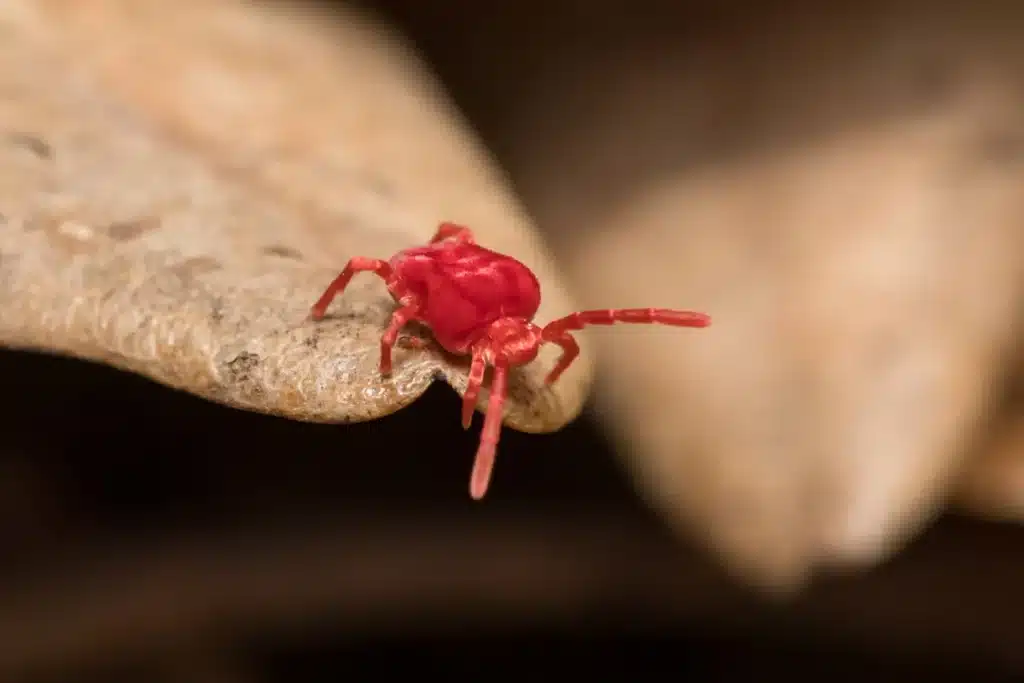
You notice it while brushing your teeth, a speck of red crawling across the grout line near your shower. You look closer. Then you see another. And another. Before long, what you assumed was a stray piece of lint reveals itself to be a living creature: a tiny red bug, moving with quiet purpose across the surface of your bathroom floor. Your stomach drops.
This scenario is far more common than most people realize. Across the country, homeowners are stumped by little red bugs, tiny bugs in bathroom environments, and red mites in the house, and most have no idea what they are, where they came from, or whether they pose any real danger. The problem is compounded by the fact that the term “tiny red bugs” covers a wide range of species, each with different biology, behavior, and the treatment they require.
At iPest Control Inc., we field calls every week from homeowners describing small red bugs in house environments, particularly in bathrooms. Some of these bugs are harmless nuisances. Others can trigger allergic reactions. And in some cases, what looks like a tiny red bug is actually a signal of a much bigger problem, like a hidden mold infestation or a structural moisture issue, hiding inside your walls.
This guide is designed to give you real, research-backed answers. We will cover every major type of tiny red bug that shows up in bathrooms and homes, how to tell them apart, what causes them, and, critically, how to get rid of them properly. Not with shallow advice, but with the kind of depth that actually helps.
What Are Tiny Red Bugs? The Main Culprits
Before you can treat the problem, you need to know ‘what are tiny red bugs’ and which specific species you are dealing with. The phrase covers several very different organisms, each with its own biology and behavior. Lumping them together and reaching for the nearest spray can is the most common mistake homeowners make, and the reason so many infestations keep coming back.
What are the tiny red bugs called? Depending on where you find them, they could be:
- Clover mites (Bryobia praetiosa), the most common culprit on window sills and walls
- Mold mites (Tyrophagus putrescentiae), the moisture-dependent species most likely found in your bathroom
- Concrete mites / Balaustium mites, the bright-red fast-moving type seen on outdoor surfaces and driveways
- Chiggers (Trombiculidae), the biting larvae found outdoors in grass and vegetation
- Red spider mites (Tetranychidae), plant-feeding mites sometimes tracked indoors
- Booklice and other bathroom-specific insects, moisture-triggered bugs that may appear alongside mites
Each of these small red bugs has different characteristics. Treating clover mites the same way you treat mold mites will get you nowhere. The following sections break down each type in detail so you can make an accurate identification before taking any action.
Clover Mites: The Most Common Tiny Red Bug in the Home
Clover mites (Bryobia praetiosa) are by far the most frequently reported tiny red bug in house situations. They are arachnids, relatives of spiders and ticks, and despite their alarming appearance in large numbers, they are plant feeders that pose no direct threat to humans. That said, they can appear in absolutely overwhelming quantities, and understanding their biology is key to stopping them.
Physical Identification
The small red bug known as the clover mite is one of the most distinctive, if you know what to look for:
- Size: Approximately 0.75 mm, smaller than a pinhead, and nearly at the limit of the naked eye
- Color: Adults are reddish-brown to dark olive-green. Young mites and eggs are bright red small red insect in appearance, which is what most people notice
- Body shape: Oval, with feather-like bristles along the back edge
- Legs: Eight legs total, but the front pair is dramatically elongated, often twice the length of the body, and held forward like antennae. This is the single most reliable identification feature
- Stain test: Crush one on a white surface. If it leaves a bright red stain (not blood; it is their natural pigment), you have clover mites. This red stain on fabric, walls, or furniture is a signature problem of this species
Biology & Lifecycle
Clover mites have one of the more unusual reproductive strategies in the insect world: there are no males. Every clover mite is female, and they reproduce through parthenogenesis, a form of asexual reproduction where unfertilized eggs develop into viable offspring. Each female lays approximately 70 eggs, deposited in protected locations such as cracks in foundation walls, mortar joints, under tree bark, and window frame crevices.
Their lifecycle passes through four stages: egg, larva (six-legged), and two nymph stages, before reaching adulthood. The entire cycle takes two to three weeks under optimal conditions. Clover mites are most active when temperatures sit between 50°F and 75°F. Above 85°F, eggs and adults go dormant. Below freezing, overwintering eggs survive until conditions improve in spring.
This biology explains a critical seasonal pattern: clover mites typically invade homes most aggressively in mid-April through mid-June and again from mid-October through December, the two seasonal windows when outdoor temperatures sit in their preferred range. A single bedroom was documented by entomologists in 1954 to contain an estimated 250,000 clover mites, a number that illustrates just how rapidly populations can explode.
Why They End Up in Your Bathroom
Clover mites are phototactic, attracted to light, and hygrotactic, drawn to moisture. Bathrooms, with their glass windows, ambient light, and higher humidity, check both boxes. Outdoors, populations build up in heavily fertilized lawns and lush vegetation growing directly against the foundation. When conditions become too hot, dry, or cold, they migrate through foundation cracks, window frames, and gaps in siding.
You are especially likely to find tiny red bugs on window sill locations in the bathroom if you have densely planted landscaping on the sunny south or east face of your home. A well-fertilized lawn pressed right up against your foundation is essentially a breeding highway straight into your bathroom window.
Are Clover Mites Dangerous?
No. Clover mites do not bite humans or pets. They do not feed on household materials, contaminate food, or transmit disease. Their only real threat is cosmetic: the red stain they leave when crushed can be permanent on light fabrics, wallpaper, curtains, and painted surfaces. Additionally, they cannot reproduce indoors and will die within a few days from dehydration once inside, since they have no access to their plant food sources.
Mold Mites & Moisture Bugs: The Bathroom Specialists
If clover mites are the most common tiny red bug in the home overall, then mold mites bathroom situations represent the most common mite problem specific to the bathroom itself. Unlike clover mites, which are merely passing through, mold mites (Tyrophagus putrescentiae) are specifically adapted to thrive in the exact conditions your bathroom provides.
What Are Mold Mites?
Mold mites belong to the family Acaridae, making them relatives of dust mites, spider mites, and ticks. The species Tyrophagus putrescentiae is considered cosmopolitan, meaning it has colonized virtually every environment on Earth. NASA scientists even recovered mold mites from the Russian space station Mir, which speaks to how remarkably adaptive this organism is. At just 0.3 mm in size, they are nearly invisible to the naked eye. Unlike clover mites, they are not red; they are typically white or tan, but in bathroom environments, mold mites bathroom populations often share space with other colored organic debris, making them appear as moving specks of varying shades.
So why are mold mites in the bathroom section of a guide about tiny red bugs? Because they are frequently confused with other tiny bugs in the bathroom, and because they share the same root cause (moisture) as many of the other species on this list. Their presence is also the most medically concerning of all the “nuisance” mites.
Biology & Lifecycle
Mold mites feed exclusively on mold spores and fungal hyphae. Where there is mold, there are mold mites. The relationship is nearly inseparable. Under ideal conditions, temperatures above 86°F (30°C) and humidity above 85%, Tyrophagus putrescentiae can complete its entire lifecycle in under three weeks. Each female can lay between 500 and 800 eggs in her brief lifespan of 9 to 30 days. The math is staggering: a single undetected mold patch behind your bathroom tile can house thousands of mites within days.
When a colony outgrows its food supply, mold mites migrate, spreading to other rooms, contaminating food storage areas, and infiltrating HVAC systems. This dispersal is how a bathroom mold mite problem becomes a whole-house problem.
Signs of a Mold Mite Infestation
Because bathroom mites of this type are nearly transparent, direct visual identification is difficult without magnification. Look instead for these indicators:
- A moving dust layer: A patch of mold with a slightly animated, shifting top surface is almost certainly host to mold mites. The “dust” is moving
- Tan or white splotches near mold: Colonies of Tyrophagus putrescentiae create visible discoloration adjacent to their food source
- Respiratory irritation: Mold mite hairs (setae) break off and become airborne, triggering allergic reactions, sinus problems, and asthma flares in sensitive individuals
- Skin irritation: Contact with shed setae causes contact dermatitis, red, itchy skin, that is easily confused with insect bites
- Musty odor: The smell of mold itself signals a mold mite risk. Where there is a musty bathroom smell, there may well be a mold mite colony
The Critical Health Warning
This is the most important point about bathroom mites of the mold variety: the mites themselves are not the primary health threat. The mold sustaining them is. Mold exposure causes wheezing, chronic nasal congestion, eye irritation, and in immunocompromised individuals, serious opportunistic infections. If you find mold mites in your bathroom, you have a mold problem that demands remediation, not just mite control.
Tiny Red Spiders: Are They Spider Mites or Something Else?
Many homeowners describe tiny red spiders, little red spiders, or small red spiders when searching for what they have found in or around their home. The distinction matters enormously, because tiny red spider mites, true red spiders, and baby red spiders are very different organisms with different behaviors and risks.
True Red Spiders vs. Spider Mites
A true tiny red spider in house discovery, meaning an actual spider (order Araneae) that happens to be red, is relatively rare but does occur. Small red spider in house sightings often turn out to be juvenile spiders of various common species, which can appear reddish-orange before they develop their adult coloration. True spiders have two distinct body segments (cephalothorax and abdomen), produce silk, and have eight legs originating from the front segment.
Tiny red spider mites, on the other hand, belong to the order Acari and are not spiders at all. Their body is a single fused unit with no segmentation. They do not produce silk web in the traditional sense (though some spin fine webbing on plants). The most commonly encountered species in domestic settings include:
Red Spider Mites (Tetranychus urticae)
The red tiny spider often reported on houseplants is almost certainly Tetranychus urticae, the two-spotted spider mite. These are primarily agricultural and horticultural pests that reproduce explosively in hot, dry conditions. They feed on plant cell fluid, causing characteristic bronze or silver stippling on leaves. When infested houseplants are brought indoors, particularly in summer and fall, these tiny red spider mites can disperse onto walls and windowsills, creating the illusion of a home infestation. They cannot survive long without plant food and do not bite humans.
Balaustium Mites (Concrete Mites)
The bright red small red insect or tiny red mite you see swarming across sidewalks, driveways, concrete walls, and masonry surfaces in spring is almost certainly a Balaustium mite, also called a concrete tiny red bug on concrete or sidewalk mite. These belong to the family Erythraeidae and are predatory mites that feed on pollen, other mites, and soft-bodied arthropods.
Unlike clover mites, Balaustium mites are elongated in shape, move very quickly (almost running), have one or two pairs of eyes set well back on the body, and there is a visible gap between their second and third leg pairs. They are not the same as clover mites, though they are frequently confused. A key field distinction: if the mites are on concrete or masonry moving at speed, they are likely Balaustium. If they are clustered near a window or on a wall, they are likely clover mites.
Reports of little red bugs on concrete, small red bugs on concrete, and cement tiny red bugs on concrete outside are almost universally Balaustium mites. They are considered beneficial organisms in natural settings, as they suppress populations of other pest mites. They can bite humans, though this is unusual and results in only mild, temporary irritation.
Baby Red Spiders
Baby red spiders or red baby spiders are newly hatched spiderlings that may appear as tiny red dots in clusters. Many common spider species, including house spiders and orb weavers, produce egg sacs that hatch into dozens or hundreds of near-microscopic spiderlings. These tend to appear in spring and early summer. A single egg sac discovered in a bathroom corner can suddenly produce what appears to be a swarm of tiny red spiders in house. They disperse quickly and are harmless, but their sudden appearance is understandably alarming.
Other Red Bugs You Might Be Seeing: Chiggers, Beetles & More
Not every tiny red bug fits neatly into the categories above. Several other species can produce the same visual, a small red bug moving through your bathroom or home, but with very different implications.
Chiggers (Redbugs), The Ones That Bite
Chiggers (Trombiculidae) are often called redbugs and represent the most medically significant member of the tiny red bug family. Also known as harvest mites, berry bugs, scrub-itch mites, or tiny red bugs that bite, chiggers are in the larval stage of trombiculid mites and are the only life stage that attacks humans.
At 0.2 to 0.4 mm in size, tiny red insects of the chigger variety are at the very edge of human visibility. They are bright red-orange in color, six-legged at the larval stage (eight-legged as nymphs and adults), and covered in setae. Critically: chiggers do not burrow into skin, a widely believed myth. Instead, they attach to skin at a hair follicle or pore, inject digestive enzymes that dissolve skin cells into a liquified meal, and feed for hours to days. The intensely itchy red welt that develops, often in a line or cluster where clothing fits tightly, is the body’s allergic reaction to the enzyme, not the bite itself.
Chigger bites typically manifest 3 to 6 hours after exposure and peak in intensity during the first 24 to 48 hours. Symptoms last up to two weeks.
Important Distinction: Do Chiggers Live in Bathrooms?
No. Tiny red bugs that bite in a bathroom are almost certainly not chiggers. Chiggers live exclusively outdoors in moist, shaded vegetation, overgrown grass, leaf litter, woodpiles, and the edges of forests. They enter homes only when carried in on clothing or pets after outdoor exposure. If you are finding very tiny bugs in the bathroom and getting bitten, the culprit is far more likely to be a straw itch mite (Pyemotes tritici), an outdoor mite tracked in on natural fiber materials, than a true chigger.
Little Red Beetles
Little red beetles are another species sometimes mistaken for mites. The most commonly encountered include red flour beetles (Tribolium castaneum) and various lady beetle species. Unlike mites, beetles have a hardened shell (elytra), a clearly segmented body, and six legs. They move differently, beetles tend to walk with purpose or fly, whereas mites move in a more erratic, scurrying pattern. If the bug you see has a distinct shell-like back and clear segmentation, it is a beetle, not a mite. Red flour beetles infest stored food products, not bathrooms, unless you have a moisture-damaged food storage situation nearby.
Tiny Orange Bugs and Brownish-Red Variants
Tiny orange mites and tiny orange bugs in house often turn out to be juvenile clover mites, Balaustium mites in different lighting, or predatory mites that entered alongside a plant pest. Small reddish brown bug descriptions frequently match clover mite adults, which as they age shift from bright red toward a darker reddish-brown. Brownish red tiny red bugs in bathroom and tiny reddish brown bugs in bathroom complaints are often mold mites viewed against a dark mold-stained surface, creating a darker visual impression than their true coloration.
Long skinny red bug in house sightings may indicate a pseudo-scorpion (harmless arachnid), a tiny predatory mite, or an elongated species of clover mite relative. These are rare but exist. Tiny brown bugs in bathroom without red coloration are more likely to be booklice (Psocoptera), wingless, moisture-loving insects that feed on mold and fungal spores, making them another bathroom-specific pest triggered by the same moisture conditions as mold mites.
Bathroom Bug Identification Guide
Use this table for bathroom bugs identification to narrow down what you are seeing before taking any action. Misidentification leads to wasted money and persistent infestations.
| Bug Type | Size | Color | Bites? | Found Where? | Key Identifier |
| Clover Mite | 0.75 mm | Red-brown to olive | No | Window sills, walls, bathroom | Elongated front legs; leaves red stain when crushed |
| Mold Mite | 0.3 mm | White/tan | No | Mold patches, damp bathrooms | Nearly invisible; lives on mold; setae cause skin irritation |
| Balaustium (Concrete) Mite | ~2 mm | Bright red | Rarely | Concrete, driveways, exterior walls | Fast-moving; elongated body; gap between leg pairs 2 & 3 |
| Chigger (Larva) | 0.2–0.4 mm | Red-orange | Yes | Outdoors only (grass, leaf litter) | Six-legged larva; causes intense itching; NOT a bathroom bug |
| Red Spider Mite | 0.4 mm | Red-orange | No | Houseplants, window areas | Found on plants; fine webbing; single fused body |
| Baby Red Spiders | Microscopic | Red/orange | No | Corners, ceilings, bathroom | Cluster of dozens near egg sac; disperse quickly |
| Little Red Beetle | 2–4 mm | Red to red-brown | No | Food storage, warm rooms | Hard shell; six legs; clearly segmented body |
| Booklice | 1–2 mm | Pale/tan-brown | No | Bathrooms, damp walls, books | Soft body; no wings; associated with mold and humidity |
Where Tiny Red Bugs Show Up: Room by Room
Location is often the fastest clue to identification. Different species gravitate to different environments based on their food source, moisture requirements, and how they enter the structure.
In the Bathroom: Shower, Sink & Drain
The bathroom is the most moisture-rich environment in any home, which makes it a magnet for moisture-dependent bugs. Tiny bugs in bathroom environments, especially tiny bugs in shower, bugs in shower grout lines, and tiny bugs in bathroom sink areas, are most commonly mold mites or booklice, both of which feed on the mold and mildew that form wherever water accumulates.
Shower mites typically concentrate in the grout lines, caulk seams, and the silicone bead around the shower pan, all locations where mold growth starts first. Very tiny bugs in bathroom near the drain or sink are often feeding on the organic buildup (biofilm) that accumulates in P-traps and drain surrounds. Tiny bugs in bathroom no wings is a descriptor that typically rules out flying insects and points toward mites, booklice, or springtails.
Moisture bugs in bathroom situations often indicate ventilation problems. A bathroom exhaust fan that is undersized, broken, or never run after showers creates sustained humidity above 70%, the threshold at which mold, and therefore mite populations, thrive.
In the Bedroom and on the Bed
Tiny red bugs in bed or little red bugs in bed discoveries understandably cause immediate panic, the fear being bed bugs. However, bed bugs are not red. They are mahogany to dark brown. If you see genuinely red bugs in your bed, they are almost certainly clover mites that have wandered in from a nearby window, or, if you share a wall with a bathroom, moisture-related mites migrating from an adjacent wet environment.
Bedroom small tiny bugs in house complaints near window areas are almost universally clover mites. Check whether the window faces south or east and whether there is a heavily planted or grassy area directly outside. That is the entry corridor.
On Window Sills and Walls
Tiny red bugs on window sill is the single most common location description for clover mites. Windows are their primary entry point and gathering spot, attracted by both the warmth radiating through glass and the light source beyond it. Finding tiny red bug in house specimens on windowsills does not mean your home has an established infestation. In most cases, these are transient visitors that will die within days. The real concern is the volume: if you are finding them daily in large numbers, there is a population explosion in the vegetation outside that needs to be addressed at the source.
On Concrete and Outdoors
Little red bugs on concrete, small red bugs on concrete, and concrete tiny red bugs seen swarming driveways, patios, sidewalks, and the exterior foundation walls of homes are Balaustium mites in the vast majority of cases. These cement tiny red bugs on concrete move rapidly and tend to appear in spring in high numbers. They are little red bugs outside that rarely establish themselves indoors. Their presence on your foundation or exterior wall is worth monitoring, as they can migrate indoors through gaps, but they are not a structural threat.
Do Tiny Red Bugs Bite? Understanding the Real Risk
This is the question homeowners ask most urgently, and the answer requires nuance. Not all tiny red bugs that bite are the same, and most of the small red bugs you will find in your home do not bite at all.
| Species | Bites Humans? | Cause Skin Reaction? | Transmit Disease? |
| Clover Mite | No | No (red stain only) | No |
| Mold Mite | No | Yes (setae irritation, contact dermatitis) | No |
| Balaustium Mite | Rarely (mild) | Mild temporary irritation | No |
| Chigger (Larva) | Yes | Yes (intense itch, welts) | No (in US) |
| Red Spider Mite | No | No | No |
| Straw Itch Mite | Yes | Yes (trunk/arm bites) | No |
The most important takeaway: if you are developing itchy welts or skin reactions and believe a tiny red bug is the cause, consider the following diagnostic questions:
- Where were you? Chigger bites only occur after outdoor exposure in grassy or wooded areas. If you have not been outdoors, chiggers are not the cause
- Where are the bites? Chigger bites cluster where clothing fits tightly, ankles, waist, armpits. Mold mite irritation is diffuse and appears wherever skin contacted the mite or mold surface
- Is there a visible mite on the skin? Clover mites and Balaustium mites are visible, whereas chiggers at 0.2 mm are not visible without magnification
- Is there mold present? Skin irritation in a bathroom with visible mold is almost certainly caused by mold mite setae or mold spore exposure, not a biting insect
A note on bed bug confusion: If you suspect tiny red bugs in bed are biting you, it is critical to confirm whether they are bed bugs. Bed bugs are flat, oval, mahogany-brown insects about 4–5 mm as adults. They leave clusters of bites, dark fecal staining on mattress seams, and a sweet, musty odor. If you are seeing any combination of these signs along with bites, contact a pest control professional immediately, do not attempt to self-treat a potential bed bug situation.
What Causes Tiny Red Bugs in Your Bathroom?
Understanding root causes is the foundation of effective pest control. Moisture bugs in bathroom environments do not appear randomly. They are responding to specific conditions that your bathroom is providing them. Address those conditions, and the bugs have no reason to be there.
1. Chronic Moisture and Poor Ventilation
The most fundamental driver of bathroom bugs is sustained moisture. When a bathroom exhaust fan fails to adequately remove humidity after showers and baths, relative humidity stays elevated for hours. At humidity above 60%, mold begins to colonize grout lines, caulk, drywall behind tile, and ceiling corners. At humidity above 70%, that mold grows quickly. Shower mites and mold mites bathroom populations follow within days of a mold colony establishing itself.
2. Plumbing Leaks and Water Intrusion
A slow leak under the vanity, a failing wax ring beneath the toilet, or water intrusion through an improperly sealed shower pan creates persistent moisture in structural cavities. This hidden moisture produces mold in spaces you cannot see, inside wall cavities, beneath subflooring, and behind tile. By the time tiny bugs in bathroom sink or shower areas become visible, the mold colony sustaining them may have been growing for months. This is why treating the bathroom bug without investigating the moisture source is always a temporary fix.
3. Vegetation and Landscaping Against the Foundation
For clover mites specifically, the path into your bathroom begins outside. Heavy vegetation, particularly well-fertilized grass, clover, or ornamental plantings, growing directly against the foundation of your home creates a population reservoir. When temperatures change and mites seek shelter, any crack in the foundation, gap in window caulking, or poorly sealed utility penetration becomes a migration corridor. The bathroom, often on an exterior wall and featuring a window, is a common destination.
4. Cracks, Gaps, and Unsealed Entry Points
Clover mites are tiny enough to pass through gaps smaller than 1 mm. Foundation cracks, gaps around window frames, missing caulk around utility pipes entering through exterior walls, and improperly sealed sill plates are all potential highways. Once inside, they congregate on warm surfaces near light, windows, walls, and tile, creating the clusters homeowners discover.
5. Houseplants Brought Indoors
Red spider mites, tiny orange mites, and other plant-feeding mites can be introduced on houseplants. A plant purchased from a nursery or brought in from an outdoor summer location may be carrying a hidden population of red tiny bugs on its leaves and stems. As the plant dries out indoors, stressed mites disperse onto nearby surfaces, including bathroom shelves, window sills, and walls, looking for new food sources.
How to Get Rid of Tiny Red Bugs: A Species-Specific Approach
Effective red bug treatment starts with identification. The steps for how to get rid of red bugs that are clover mites are different from the steps for how to get rid of red mites that are mold mites, and both differ from treating a chigger exposure. Using the wrong approach wastes time, money, and potentially makes the situation worse. Here is a comprehensive, species-by-species action plan.
Getting Rid of Clover Mites
Step 1: Do NOT Crush Them
The first instinct, swatting them, is the worst thing you can do. Crushing clover mites releases their red pigment, which stains fabric, painted walls, and wallpaper permanently. Instead, use a vacuum cleaner with a HEPA filter to collect them from window sills, walls, and floors. Dispose of the vacuum bag or contents outside immediately.
Step 2: Vacuum Thoroughly and Systematically
Work the vacuum across all affected window sills, curtain rails, baseboards, and wall surfaces. Pay particular attention to south- and east-facing rooms. A damp sponge or sticky tape can also capture them without crushing, effective for tiny bugs in bathroom sink rims and tight corners.
Step 3: Seal All Entry Points
Use a high-quality silicone-based caulk to seal gaps around window frames, door frames, pipe penetrations, and any visible cracks in the foundation. Tiny red bugs can pass through openings smaller than 1 mm, so thoroughness matters here. Pay special attention to any point where the exterior wall meets a window frame or utility penetration.
Step 4: Create a Vegetation-Free Buffer Zone
The University of Missouri Extension recommends creating a grass-free zone 18 to 24 inches wide around the entire foundation perimeter, especially on south, southwest, and east-facing sides. Fill this strip with crushed rock, pea gravel, or non-host plants (marigolds, petunias, salvia, zinnia, barberry, juniper, or yew). Clover mites cannot easily cross rough, dry surfaces and actively avoid these plant species.
Step 5: Reduce Lawn Fertilization Near the Foundation
Heavy nitrogen fertilization of lawn grass adjacent to the house is directly linked to higher clover mite populations. Reduce fertilizer applications within three to four feet of the foundation, and mow regularly to keep grass short. Tall, lush, fertilized grass is a breeding and feeding ground for clover mites.
Step 6: Apply Exterior Perimeter Treatments If Needed
For significant infestations, a licensed pest control professional can apply bifenthrin or cyfluthrin-based residual insecticides along the exterior perimeter, targeting foundation walls, entry points, and the vegetation barrier zone. These treatments are highly effective at reducing population pressure before it enters the structure. Consumer-grade acaricides (mite-specific pesticides) are also available but require careful application to avoid staining interior surfaces.
Getting Rid of Mold Mites
Step 1: Locate and Eliminate the Mold
There is no point treating bathroom mites of the mold variety without first eliminating their food source. Scrub all visible mold from hard surfaces with a solution of one cup of bleach per gallon of water, or use a commercial mold-killing product with listed mold-kill efficacy. Allow surfaces to dry completely. For mold on soft materials (grout, caulk, drywall), replacement is often necessary rather than surface treatment.
Step 2: Identify and Fix the Moisture Source
Test bathroom humidity with a hygrometer. Healthy indoor humidity should sit below 50%. If your bathroom regularly exceeds 60% after showering, your exhaust fan is undersized or failing. Replace it with a model rated for your bathroom’s square footage and run it during and for 20 to 30 minutes after every shower. Check under the vanity, around the toilet base, and behind the toilet for slow leaks. A plumber’s dye test in the toilet tank can reveal a failing flapper that allows water to seep continuously.
Step 3: Clean Surfaces with HEPA Vacuum
A HEPA-filtered vacuum removes dead mite bodies, shed setae, mold spores, and live mites from surfaces. Standard vacuums without HEPA filters recirculate these particles into the air, potentially worsening respiratory symptoms. After vacuuming, wipe hard surfaces with a diluted bleach or hydrogen peroxide solution.
Step 4: Improve Ventilation Permanently
Beyond the exhaust fan, consider leaving bathroom doors open after showering to promote airflow. A small portable dehumidifier in a chronically damp bathroom can make a significant difference. If the bathroom has no window or inadequate ventilation, a whole-house dehumidifier may be warranted.
Getting Rid of Red Spider Mites on Houseplants
Isolate any infested houseplants immediately. Spray leaves thoroughly, including undersides, with insecticidal soap or neem oil. Remove heavily infested leaves and dispose of them in a sealed bag. Do not compost mite-infested plant material. Treat weekly for three to four weeks to break the reproduction cycle. Do not bring outdoor plants inside without a thorough inspection and a precautionary treatment cycle.
Treating Chigger Exposure
If you have been bitten by tiny red bugs that bite after outdoor exposure, the treatment is personal, not environmental. Shower immediately with soap and hot water to remove any mites still on the skin. Wash all clothing in hot water. Apply over-the-counter calamine lotion or hydrocortisone cream to reduce itching. Oral antihistamines (diphenhydramine/Benadryl) can reduce the allergic response. Do not scratch, the bites are an allergic reaction to enzymes, not an active infestation, and scratching risks secondary infection. If symptoms worsen or the skin becomes infected, consult a physician.
How to Prevent Tiny Red Bugs from Coming Back
Treatment without prevention guarantees recurrence. Long-term control of tiny red bugs in house environments requires addressing the structural, environmental, and biological conditions that attract them in the first place.
Bathroom-Specific Prevention
- Run the exhaust fan consistently: During every shower and for at least 20 minutes afterward. Consider a timer switch if you forget
- Inspect caulk and grout annually: Failing caulk and cracked grout allow moisture into the wall cavity, creating hidden mold that sustains mold mites bathroom populations for years
- Check under-sink plumbing monthly: A slow drip from a compression fitting or supply line that goes undetected for months is all the moisture a mold colony needs
- Keep bathroom dry between uses: Squeegee shower walls after each use and hang towels spread open to dry. Leave the shower curtain or door open to allow air circulation
- Monitor with a hygrometer: A $10 humidity meter placed in the bathroom tells you immediately whether your ventilation is adequate
Whole-Home Exterior Prevention
- Seal the building envelope: Annually inspect and re-caulk all window frames, door frames, utility penetrations, and foundation cracks
- Maintain the vegetation buffer: Keep the 18-to-24-inch perimeter around your foundation clear of grass and vegetation
- Choose mite-resistant plantings: Marigolds, petunias, zinnias, salvia, barberry, juniper, spruce, arborvitae, and yew are all unattractive to clover mites and make excellent foundation-adjacent plants
- Avoid excessive lawn fertilization: Especially within four feet of the foundation. The nitrogen-rich soil drives population explosions
- Store firewood away from the house: Wood piles against the foundation provide overwintering habitat for multiple mite species
- Inspect all incoming plants: Never bring an outdoor or nursery plant indoors without a visual inspection of both leaf surfaces and the soil surface
When to Call a Professional, and Why It Matters in Miami
DIY methods work well for minor infestations of known species. But there are clear situations where professional intervention is not just advisable, it is necessary.
Call a Professional When:
- You have applied treatments repeatedly and the tiny red bugs keep returning within days or weeks
- You find tiny bugs in bathroom in conjunction with visible mold and cannot identify the moisture source
- The infestation has spread to multiple rooms or you are finding bugs in bathroom, bedroom, and kitchen simultaneously
- Household members are experiencing unexplained respiratory symptoms, skin irritation, or allergic reactions indoors
- You suspect the infestation involves bed bugs rather than the mites described here, these are categorically different and require professional-grade intervention
- The volume of tiny red bugs in house is overwhelming, hundreds or thousands of insects visible at once
- You cannot confidently identify what species you are dealing with and need an expert assessment
Protecting Your Miami Home From Tiny Red Bugs
Miami and South Florida present unique challenges for pest management. The subtropical climate, warm year-round, with high ambient humidity and an extended growing season, means that moisture bugs in bathroom problems are not seasonal here. Mold can grow virtually year-round. Clover mites have an extended active window compared to northern states. Formosan termites, roof rats, and a host of other pests create conditions that sometimes mask secondary pest problems like tiny red mites in house until they become significant.
South Florida homes also tend to feature slab foundations with direct soil contact, open-plan construction that promotes moisture migration between rooms, and dense tropical landscaping, all factors that elevate the risk of moisture-driven pest infestations.
iPest Control Inc. specializes in South Florida’s specific pest landscape. Our licensed technicians can accurately identify your tiny red bug situation, locate the moisture or vegetation source driving the infestation, and develop a targeted treatment plan that addresses the root cause, not just the symptom. Whether you are dealing with small red bugs in house environments, a bathroom bug situation rooted in hidden mold, or a structural moisture problem you cannot find yourself, we have the diagnostic tools and the expertise to solve it.
Take Back Your Bathroom, and Your Peace of Mind
A tiny red bug in your bathroom is rarely as harmless as it might seem, not because the bug itself is dangerous, but because its presence is almost always a symptom of a condition your home needs you to address. Moisture bugs in bathroom environments are telling you that something in your structure is too wet. Clover mites crawling across your window sill are telling you that your foundation envelope has a breach. Mold mites on your shower grout are telling you that mold is living somewhere nearby.
Treating the bugs without reading the message they carry leads to temporary relief and permanent recurrence. The homeowners who solve their tiny bugs in bathroom problem for good are the ones who trace the root cause, whether that is a failing exhaust fan, a slow pipe leak, cracked foundation caulk, or an overgrown garden bed, and fix it.
At iPest Control Inc., we approach every bathroom bug call as an investigative process, not just a spray-and-go service. Our goal is not just to eliminate what you can see today, but to identify why it is there and prevent it from coming back.
If your home has a bed bug problem alongside or instead of a mite problem, our Bed Bug Exterminator in Miami, FL provides the most thorough, evidence-based bed bug elimination available in South Florida, from canine-assisted detection to heat treatment and residual chemical protocols. Do not wait for a small problem to become a structural crisis.
Contact iPest Control Inc. Today, Free Inspection for Miami Homeowners
Frequently Asked Questions
What are the tiny red bugs in my bathroom?
The most likely culprits are clover mites (if near windows or walls) or mold mites (if near grout, caulk, or visible mold). Clover mites are reddish-brown with elongated front legs and leave a red stain when crushed. Mold mites are nearly invisible, white-to-tan, and live exclusively on mold. Both are triggered by different conditions and require different treatment approaches.
What are tiny red bugs called?
The most common tiny red bugs found indoors are called clover mites (Bryobia praetiosa) and mold mites (Tyrophagus putrescentiae). Outdoors on concrete, they are usually Balaustium mites. The biting variety found after outdoor exposure are chiggers or redbugs (Trombiculidae). The general term “tiny red mites” covers all of these species, which is why precise identification matters so much before treatment.
Do tiny red bugs bite?
Most do not. Clover mites, mold mites, and red spider mites are non-biting species. Balaustium mites may rarely bite, causing brief, mild irritation. Chiggers do bite, but they are found exclusively outdoors and do not live in bathrooms. If you are experiencing bites indoors and finding tiny red bugs in bed, consult a pest control professional to rule out bed bugs, which are a completely different pest.
Are tiny red bugs dangerous?
The bugs themselves are generally not dangerous. However, mold mites signal a mold infestation that is dangerous, particularly for individuals with respiratory conditions, allergies, or compromised immune systems. Additionally, mold mite setae (hair-like sensory organs) can cause contact dermatitis and worsen asthma. The presence of any mite in significant numbers warrants investigation into the underlying moisture or access issue driving the infestation.
What are the tiny red bugs on concrete?
Little red bugs on concrete and small red bugs on concrete are almost always Balaustium mites, also called concrete mites or sidewalk mites. They are predatory mites that feed on pollen and other small invertebrates. They are common in spring, move quickly, and are elongated in body shape with a visible gap between their second and third leg pairs. They are not clover mites, and they are not dangerous, though they can occasionally bite if handled.
What is the difference between clover mites and spider mites?
Both are tiny red mites, but they are distinct species. Clover mites (Bryobia praetiosa) feed on plant sap but are commonly found indoors near foundations. Their most distinctive feature is their elongated front pair of legs. Red spider mites (Tetranychus urticae) are primarily plant pests, leave fine silk webbing on host plants, and cannot survive long indoors without plant food. Spider mites cause visible plant damage (stippling, bronzing); clover mites cause staining when crushed but do not damage plants as severely.
How long do tiny red bugs live?
Clover mite adults live approximately two to four weeks under outdoor conditions, and die within a few days indoors from dehydration. Mold mites have a lifespan of 9 to 30 days but reproduce at a staggering rate, up to 800 eggs per female, making colony control dependent on eliminating the mold food source rather than targeting individual mites. Chigger larvae feed for hours to days before detaching.
Can I use diatomaceous earth for tiny red bugs?
Food-grade diatomaceous earth (DE) can be effective against mites by abrading their exoskeleton and causing dehydration. However, there are important limitations: DE becomes ineffective when wet, making it poorly suited to bathroom environments. It should never be applied to mold-infested surfaces without removing the mold first. In bathrooms and humid spaces, DE has limited practical utility. For outdoor applications around the foundation perimeter, it can be a useful supplementary tool alongside other prevention measures. For significant indoor infestations, professional-grade treatments are considerably more reliable.